
If you own a building with a flat or low-slope roof, you already know the drill. Every spring and fall, you’re up there checking seams, patching cracks, and praying that the next heavy downpour doesn’t end up in your living room or warehouse floor. It’s a cycle of “patch and pray” that eats up your budget and your weekends.
But what if you could… stop?
At EPDM Coatings, we’ve spent years showing people that the secret to zero-stress roofing isn’t a better patch job; it’s a better chemistry. By using a high-grade roof sealant like Liquid Butyl Rubber, you’re essentially shrink-wrapping your entire building in a single, seamless membrane. Here is the “boots-on-the-roof” reality of how this technology actually saves you from future maintenance.
The “Seam” Problem: Where Most Roofs Fail
Ask any roofing contractor where a leak starts, and 9 times out of 10, they’ll point to a seam. Whether it’s a metal roof, a TPO sheet, or an old EPDM membrane, the joints are the weak link. Over time, adhesives dry out, fasteners back out, and the wind eventually finds a way under the edge.
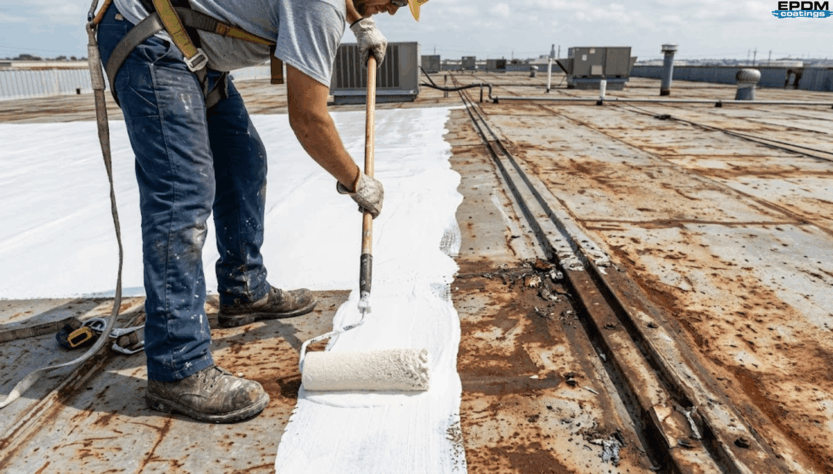
When you apply a liquid EPDM rubber coating, you aren’t just adding a layer; you are eliminating the seams. Because it goes on as a liquid and cures into a solid, monolithic sheet, there are no gaps for water to exploit. It’s the difference between wearing a patchwork quilt in the rain versus a custom-molded raincoat. No seams means no maintenance calls for “lifting edges” or “separated joints.”
Why “Ponding Water” Doesn’t Have to Be a Disaster
Flat roofs are notorious for “ponding”—those stubborn puddles that sit for days after a storm. For most water-based or acrylic coatings, standing water is a death sentence. It causes the coating to re-emulsify (basically turn back into liquid) and peel away.
This is where butyl rubber changes the game. Our formula is a solvent-based thermoset, meaning once it cures, it is chemically indifferent to water. It doesn’t matter if that puddle sits there for two days or two months; the membrane won’t soften or degrade. By using a liquid rubber waterproof sealant that actually likes the water, you eliminate the frantic need to sweep off your roof after every rain.
Stretching with the Seasons: The 500% Elongation Rule
Buildings are living things—they breathe, shift, and move. In the heat of July, your roof expands; in the dead of winter, it shrinks. If your roof coating is rigid, it will crack. It’s just physics.
Our epdm rubber coatings are engineered with a 500% elongation rate. Think of it as a giant rubber band stretched over your structure. When the building moves, the coating moves with it. This flexibility prevents the tiny “spiderweb” cracks that eventually turn into major leaks. You aren’t just coating the roof; you’re giving it a flexible skin that handles thermal shock without breaking a sweat.
The Invisible Benefit: UV Defense and Cool Roof Tech
The sun is arguably a roof’s worst enemy. UV rays bake the life out of traditional materials, making them brittle and “chalky.” One of the biggest maintenance tasks for older roofs is replacing sections that have literally been cooked to death by the sun.
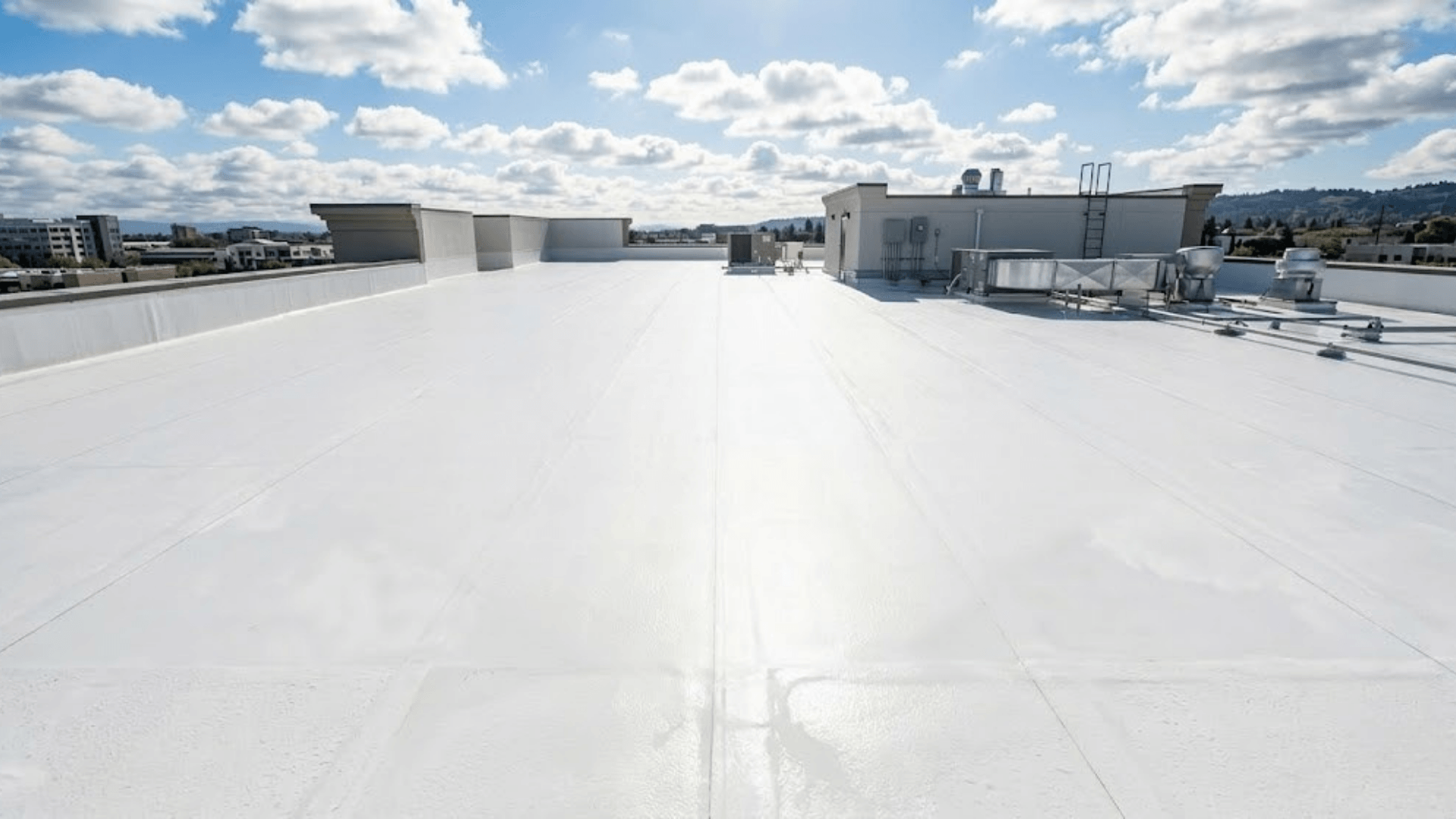
By applying a white butyl rubber coating, you’re essentially putting SPF 50 on your building. It reflects up to 85% of UV rays, keeping the underlying structure cool and protected. Not only does this save your AC bill, but it also stops the “aging” process of your roof. A cool roof stays a flexible roof, and a flexible roof stays a leak-free roof.
One Coat, Two Decades of Peace
Most people dread roof maintenance because it’s a multi-step nightmare. You need primers, base coats, mesh tapes, and top coats. With liquid butyl rubber, we’ve simplified the math.
- Direct Bond: It sticks to almost anything—metal, weathered TPO, concrete, and fiberglass—usually without a primer.
- One and Done: You get a full 20-mil thickness in a single pass.
- Immediate Protection: It’s waterproof the moment you put it down. No more checking the 5-hour weather forecast before you start work.
A single application can easily give you 18 to 20 years of service. That is two decades where your “roof maintenance” consists of little more than clearing out the gutters once a year.
The Bottom Line
You can keep spending money on temporary fixes, or you can solve the problem once and for all. By switching to a professional-grade roof sealant, you’re investing in the chemistry of your building. You’re stopping the leaks before they start, resisting the sun, and making ponding water a non-issue.
Stop managing your roof’s decline and start managing its performance.